How Music Artists Are Promoting Their Music on TikTok in 2026

> Over the past seven days, music marketing on TikTok has shifted from announcing songs to building repeatable social premises around them, while Instagram is carrying narrative, touring, and conversion. The strongest campaigns seed one recognizable moment through raw performances, memes, fan identities, localized stories, comment replies, and multiple visual contexts—not one polished launch asset.
What artists promoted this week—and where
This review covers activity observed from September 5–12, 2026. Across both major and independent artists, the clearest platform split was functional: TikTok operated as the testing and participation layer, while Instagram more often supplied credibility, artist narrative, live proof, partnerships, and direct commercial follow-through.
TikTok campaigns moved quickly between lyric teasers, low-production performances, jokes, fan prompts, and remixes of the same song moment. Instagram frequently received the same winning creative unchanged, but major artists also used it for documentaries, interviews, tour recaps, vinyl, and release-world building.
The important exception: cross-posting itself was not a weakness. Jos Rivers, Warren Zeiders, Sickick, and Porchlight all published effectively identical vertical creatives on both platforms. Platform adaptation happened around the creative—caption, profile link, surrounding campaign, and follow-up—not necessarily inside every edit.
1. Sound seeding is becoming a content system, not a single post
The most developed independent campaigns did not keep changing songs. They kept a recognizable song section fixed while changing the social reason to watch.
Xofiia: hold the chorus and hook constant, rotate the setting
@xofiiamusic repeatedly used the same short chorus/drop from “Sleep On Love” in bedroom and parking-garage clips. Several posts reused the same promise: viewers who copied the link had discovered the song early enough to deserve a hypothetical backstage pass.

The campaign varied wardrobe, room, movement, and clip length while preserving two assets: the song moment and the “early fan” proposition. Another variation removed the sharing request and simply told viewers they were a “day 1 listener.”
Early-fan loop
Same chorus, new setting, repeated identity cue.
Comments mirrored the intended behavior: viewers posted “OG ticket,” claimed their early status, reported copying the link, and mentioned adding the track to Spotify. This is stronger than a generic “stream now” request because the action gives the viewer a role in the artist’s future story.
The limitation is equally important: repeated artist-owned posts do not automatically create distributed sound adoption. The tracked sound remained much smaller than the artist post’s reach, so this was primarily an engagement-and-awareness loop at the time of review—not yet a broad creator trend.
Porchlight: seed one lyric into multiple content genres
@porchlighttheband built the most complete one-song content matrix in the sample. Five posts revolved around the same “sleeping through alarms again” section of “Paranoia,” but each assigned it a different job:
- A full-band rehearsal delivered energy and musicianship.
- A guitarist-to-vocalist cut turned the lyric into a relatable oversleeping question.
- A singer lying in grass became a mood visualizer.
- A hallway Q&A explained the lyric’s meaning.
- A seated rehearsal emphasized the “wake up” refrain.


There was little hard selling inside the videos. Recognition accumulated through the repeated lyric, singer styling, rehearsal environment, and chorus. Audience comments showed active listening behavior—repeat plays, catalog exploration, and requests for touring and more songs in the same style.
The sound also escaped the artist’s account. One user placed the chorus under a romantic night-walk POV; another used it behind an absurd “alpha wolf” photo meme. These were independent concepts, not copies of an artist-issued template.


492 sound uses
“Paranoia” was moving beyond artist-owned promotion.
That distinction matters: successful seeding often means the sound becomes useful for moods the artist did not explicitly prescribe.
Sound reach and post reach are different measurements
Several viral artist posts had limited downstream sound reuse at the snapshot:
8 sound uses
Jos Rivers’ raw story-song primarily drove demand for the recording.
54 sound uses
Mikal Sabella’s teaser generated lyric demand before broad reuse.
74 sound uses
Xofiia’s campaign built early-fan identity faster than creator adoption.
29.4K sound uses
ZVC’s “her” already supported a large edit ecosystem.
18.8K sound uses
Kero Kero Bonito’s “Sick Beat” had an established revival ecosystem.
A high-performing teaser can prove audience desire without proving sound portability. Artists should track those outcomes separately: comments asking for the song, profile or streaming intent, repeat artist posts, creator reuse, and the diversity of formats using the sound.
2. The best snippet teasers sell a lyric before they sell a release
The week’s strongest rising-artist teasers placed the emotional payload on screen immediately and delayed—or omitted—the promotional instruction.
Mikal Sabella: one painful line, almost no packaging
@mikalsabellamusic opened on the lyric, “don’t think you ever loved me / I was just standing close enough,” over a low-lit selfie lip-sync. The song began immediately, the clip lasted roughly one lyrical thought, and no release card interrupted it.

The comments became the demand signal: people asked for the title, release date, Spotify availability, and an immediate drop. The artist then reposted the identical recording and section in another selfie setup, attached pre-save language in the caption, and later switched to a different lyrical section after release.


This is a clean sequence: establish lyrical resonance, repeat the recognized section, convert interest through caption and profile, then expose a new part of the released track.
Jos Rivers: narrative suspense can carry a much longer snippet
@josintheriver opened an acapella performance with “it’s all about perspective,” then began, “Well my taxi driver wouldn’t shut up about how much he loved his wife…” The raw, single-take story lasted far longer than the typical teaser, but every line advanced the narrative.

There was no explicit CTA. Comments supplied it: “record it,” “where’s the rest?” and requests to preserve the acapella arrangement. The artist then turned one viewer’s “make this an actual song” comment into a reply video featuring a produced version inside a taxi, maintaining the pink hoodie, lyric, and narrative setting.

The lesson is not simply that raw video works. The rawness had a job: it made the audience feel present before production decisions were fixed, so asking for the finished song felt consequential.
3. Fan engagement is moving from comments to identity and authorship
Three engagement models were visible this week.
Early-fan identity
Xofiia’s “backstage pass” and “day 1 listener” framing turned discovery into status. Chase Martinez similarly told viewers that staying made them an “OG,” although his direct requests to share and visit Spotify were more overt.

Bellamy Greene used another version of the same negotiation: rather than leading with a release announcement, he asked viewers to stay five seconds so he could prove to his Asian parents that he was not “cooked at music.” A Spider-Man reference supplied the topical comparison, while the same chorus recurred across follow-ups.

The strongest framing made support socially meaningful: help prove the career, become an original fan, or participate before the artist becomes widely known.
Comment-to-content continuation
Jos Rivers did more than reply conversationally; the requested next chapter became the reply. That gives commenters partial authorship over the rollout and creates continuity between posts.
Rosie Charles used several lighter versions of this system during the week: “should I drop it?”, “where my OGs at?”, a chorus reveal, and a reaction framed around whether her father liked the song. These posts kept the unreleased track inside a continuing relationship rather than treating each teaser as a separate announcement.
Community mobilization
Loic Sumfor built “Crush” into a Cameroonian and pan-African mission. His direct-to-camera posts compared Cameroonian support with Nigerian Afrobeats success, asked viewers to use the sound aggressively, and repeatedly framed international growth as collective representation.


A day-numbered campaign post then changed the interaction: viewers were invited to add “Sumfor” to their names while the same track played through a lifestyle montage.

This format is especially relevant for independents with a real regional, diaspora, campus, language, or scene identity. The community claim worked because it was specific; a generic “support small artists” appeal would not carry the same meaning.
4. Dance challenges still work—but “challenge” now includes adaptation
The clearest current dance ecosystem used a repeatable sequence of bounce steps, shuffles, arm swings, body rolls, and chest pops. The original full-body seed was intermediate in difficulty, but responders altered the burden of participation.


One creator reproduced the full routine as a duo, another performed it solo, and a third converted it into seated hand gestures and lip-syncing. That variation is strategically important: choreography travels further when the musical cues remain recognizable but the execution can collapse from full-body dance into a low-skill gesture version.
The original clip did not need explanatory overlays. Repetition lived in the movement and musical cues. At the time of review, the sound had hundreds of uses, giving this ecosystem more evidence of actual replication than many posts merely labeled “dance challenge.”
By contrast, several high-reach “new song dance challenge” search results were responder videos rather than verified artist launches. Artists should not mistake a creator performing to music for a campaign they can replicate without first identifying who seeded the routine and whether the sound is actually spreading.
5. Open verses are functioning as creative infrastructure
The BAHA–KASSA open-verse ecosystem showed how one instrumental gap can support multiple identities without changing the underlying audio.
Participants used the same sung opening and open beat but contributed original Tagalog or Taglish verses about flooding, corrupt governance, disaster funds, and political neglect. One entry used a podcast-style studio, another added red lighting and kinetic captions, and another performed in a black-and-white home scene while interacting with a toddler.


The challenge worked as a shared editorial prompt, not merely a missing verse. The subject matter gave creators something to say; the open section gave them room to say it in their own voice.
However, open-verse participation has a higher skill floor than a meme or hand gesture. The observed entries required writing, delivery, recording, and often captioning. That makes it useful for recruiting credible musicians and scene voices, but less suited to mass casual participation.
6. Behind-the-scenes content is expanding beyond studio footage
Conventional “making the song” posts were present, but they were not the strongest distinctive format in the broader corpus. More compelling behind-the-scenes content showed a transformation, location, relationship, or emotional cost.
Career-arc proof
Sickick juxtaposed an early purple-lit car performance with festival crowds, lasers, fans singing, and a handwritten sign. “How it started” became “How it’s going,” while one continuous track joined the two eras.


The creative was identical across platforms, but Instagram produced the larger observed response. Because the media did not differ, that gap cannot be credited to editing. The useful creative finding is the structure: archived vulnerability plus present-day crowd proof makes catalog promotion feel like a payoff rather than nostalgia for its own sake.
Song meaning and emotional process
Porchlight used a hallway walk-and-talk to explain what inspired “Paranoia,” then carried viewers into the rehearsal environment. Sara Bareilles used Instagram differently: a candid documentary clip showed her processing grief around rehearsal, while an interview explained how “Ladies in a Line” emerged from fertility struggles.

For established artists, behind-the-scenes increasingly means access to meaning—not only footage from the control room.
Localized release-week personality
David Kushner balanced a polished “Ritual” music-video excerpt with casual posts from Poland. In one, Zalia taught him to sing “Daylight” in Polish; another placed him inside a local morning-show environment.


The polished post delivered the release fact. The localized posts supplied personality, community recognition, and a reason for regional fans to participate in the week around it.
7. Major artists are borrowing native premises instead of disguising ads
Warren Zeiders and Bellah Mae promoted “Overrated” through a relationship “hard launch.” The official duet played while the pair climbed around a convertible, lip-synced, and behaved like a couple reveal rather than delivering a conventional announcement.

The same creative appeared on Instagram with no material adaptation. Follow-ups extended the relationship world through “soft launch,” wedding, and “wrong answers only” framing. The song became the soundtrack to a recognizable social scenario.
Kero Kero Bonito took a different route with a twelve-year-old catalog song. The band first acknowledged that “Sick Beat” had “entered its second life,” then posted a club POV in which nobody knew the vocalist had made the song playing in the room.


Fans were already using the track for radically different dance styles, from cute full-body choreography to breakdancing and acrobatics. The artist did not force instructions onto the trend; it recognized the revival and added native creator-perspective content around it.


That is a useful major-artist pattern: when fans have already found the format, acknowledge and amplify it before trying to formalize it.
8. Instagram’s strongest role was depth, proof, and conversion
Instagram was less visible as the birthplace of open participation in this sample, but it carried several jobs TikTok did not consistently handle.
Tour-world building
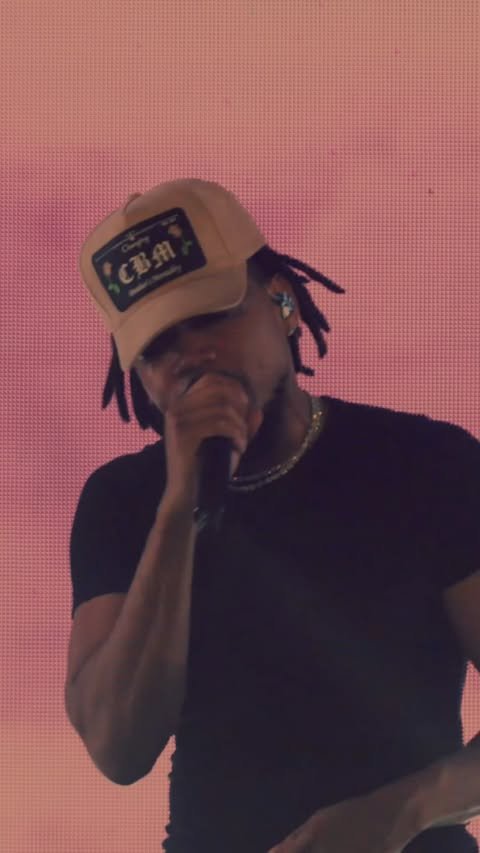
Chance the Rapper used live footage, fan singalongs, custom merchandise, city landmarks, and tour graphics to make each stop feel like an episode. One recap ended with a ticket destination; another simply showed the packed-room experience.
Direct commerce with entertainment
Remi Wolf promoted signed vinyl by running through an office with a cart of records, throwing copies to staff while “Cinderella” played. The post communicated scarcity and product without becoming a static sales card.

Partnership amplification
Blossoms announced a game soundtrack placement through a casual group selfie rather than a press graphic. The partnership gave the track access to a gaming audience while the delivery kept the band visible and personable.

These examples point to Instagram as the layer where discovery is converted into a larger artist world: documentary, interview, live reputation, merchandise, tour demand, or partner distribution.
9. Emerging music-marketing formats to watch
The retention bargain
Artists openly negotiate for five or fifteen seconds by contrasting that tiny ask with something the viewer already watches. Bellamy Greene used Spider-Man and GRWM references; the song arrived as the payoff.
This is more native than “stop scrolling,” but it can become repetitive quickly. Bellamy’s campaign worked as a sequence because the same chorus and family/career conflict remained recognizable while the comparison and setting changed.
Comment-to-production arcs
A raw idea becomes a produced version because a visible viewer asked for it. Jos Rivers provided the strongest observed example. This creates episodic continuity and makes audience response part of the song’s development history.
Catalog “second-life” content
Instead of pretending an older song is new, artists openly react to its revival. Kero Kero Bonito’s framing gave existing fans nostalgia and new fans context without interrupting the organic dance ecosystem.
Song-world content matrices
Porchlight’s system treated one lyric as a flexible creative object: rehearsal, visualizer, relatable question, meaning explainer, and intimate performance. This is emerging as a more durable alternative to posting the same lip-sync repeatedly.
Regional movement framing
Loic Sumfor turned sound use into an expression of Cameroonian pride and pan-African ambition. This can mobilize communities that would ignore a purely individual plea for streams.
Sound as mood utility, not prescribed choreography
“Paranoia” moved into both romantic longing and absurd wolf humor. The strongest sound seeds increasingly leave room for unrelated visual concepts rather than locking users into one official interpretation.
Editable visual templates
Across the wider recent TikTok corpus, editable photo and video templates were the clearest high-heat format family examined. They were fresher and showed stronger breakout behavior than ordinary artist BTS, dance invitations, or direct song promotion. The caveat is that most winners were template accounts, not verified artist campaigns, so this is an opportunity signal rather than proof of artist-led success.
For music marketers, the transferable idea is to design a repeatable visual transformation tied to one unmistakable beat or lyric—not merely upload a song beneath a generic template.
What this week says about music promotion
The winning unit is no longer “the song announcement.” It is a recognizable song moment attached to a portfolio of social uses.
Rising independents were strongest when they made viewers feel early, emotionally useful, or partially responsible: discover this before everyone else, help prove the career, ask for the next verse, or join a community push. Major artists were strongest when they combined native premises with assets independents cannot easily manufacture: crowds, touring, collaborators, archival footage, media appearances, merchandise, and partnerships.
The practical sequence visible across the best campaigns was:
1. Lead with the lyric, story, joke, movement, or identity—not the release date.
2. Repeat one recognizable section long enough to build memory.
3. Change the visual and social premise instead of constantly changing the sound.
4. Turn comments and fan uses into subsequent posts.
5. Separate audience demand from actual sound adoption.
6. Let TikTok test participation and discovery contexts.
7. Use Instagram to deepen narrative, display live proof, and convert attention into tickets, products, pre-saves, or artist affinity.
The central takeaway is simple: artists are not merely promoting tracks on short-form video. The best campaigns are teaching audiences what role a song can play—in a joke, relationship reveal, private memory, dance, political verse, fan identity, regional movement, or career story.


