What Top Skincare Brands Are Doing on TikTok in 2026

Skincare social shifted from generic routines toward culture-backed proof: ingredient debates became entertainment, experts translated actives, creators supplied lived results, and events turned products into community symbols. TikTok favored blunt, conversational hooks and trend-native demos; Instagram favored polished texture, heritage, and campaign storytelling. PDRN, retinol, peptides, barrier care, and seasonal transitions led the week.
What top skincare brands posted this week
This review covers official-brand and clearly identified creator activity observed from September 5–12, 2026. The clearest change is that brands are no longer treating “science,” “creator,” and “culture” as separate lanes: the strongest campaigns fused at least two.
The six biggest skincare marketing shifts
1. Ingredient education is becoming entertainment
PDRN was the week’s most visible launch ingredient, but The Ordinary and Glow Recipe translated it differently. The Ordinary turned the salmon-versus-vegan distinction into jokes, animation, creator explainers, and a London pop-up rather than repeating a clinical definition.
Its TikTok used a creator, a mini microphone, benefit overlays, and a “pair this with that” structure to match Lacto-PDRN with caffeine, Volufiline, or peptides. Another post compressed the message into the emphatic “NO SALMON IN OUR PDRN. PERIOD.”


Instagram received the more crafted interpretation: a whimsical fishing animation ended with an “Eye Facts” panel explaining that the formula is vegan and “a product of a lab, not a sea.” This is science made memorable through a single contrast, not a dense lecture.

Glow Recipe used PDRN less as a scientific argument and more as a beauty-culture bridge. Its Vegan PDRN Lip Blur Balm campaign foregrounded cushion texture, shade payoff, and Korea’s soft-blur lip aesthetic. TikTok opened with “your lips called. they want this”; Instagram used a synchronized nine-panel collage of smears, swatches, applicators, and lips.


The shift: an ingredient name alone is no longer the hook. Brands are attaching ingredients to a conflict, visual behavior, cultural origin, or easy decision framework.
2. Expert authority is moving from endorsement to translation
Youth To The People built a concentrated retinol campaign around two complementary proof formats. Esthetician Nayamka Roberts-Smith explained the conversion ladder from retinoic acid to retinal to retinol, addressing irritation and ending on the idea that consistency matters more than maximum concentration.

The brand then paired that lesson with a visibly disclosed partner testimonial. The creator opened, “For my skin to look like this every day, I use this every night,” discussed acne, dark spots, texture, fine lines, and elasticity, applied the balm, and inserted earlier-skin footage plus a comparison view.

La Roche-Posay also benefited from independent professional curation. A “virtual esthetician” opened an affordable cleanser guide with: “If you are paying $50 for a basic gentle cleanser, you are getting played.” She compared drugstore cleansers by skin type inside a retail aisle, placing La Roche-Posay within a broader recommendation set rather than presenting a single-brand commercial.

The shift: “derm-approved” is becoming specific. The credible content now explains conversion pathways, concentrations, skin-type fit, application frequency, or trade-offs. A lab coat or credential without usable interpretation is a weaker creative proposition.
3. Testimonials are becoming more structured and visibly accountable
La Roche-Posay’s partner testimonial used a night-to-morning reveal rather than a generic recommendation. The creator disclosed the partnership on screen and verbally, applied Cicaplast Balm B5+ as an overnight mask, tied the use case to airplane dryness and travel stress, and showed her morning skin.

CeraVe combined social proof with secondary demonstration. Its newest TikTok opened on a green-screen reaction to Bethenny Frankel recommending the Super Boost Serum, then moved to a creator explaining the multitasking claims and swatching the lightweight texture. The celebrity clip created recognition; the creator made the product legible.

Across the wider recent skincare landscape, visible before-and-after testimonials were a stronger cultural lane than generic sequential routines. The important distinction is not simply showing results: stronger executions establish the prior problem, time or usage pattern, application, and present outcome in one narrative.
4. Skincare is moving into adjacent lifestyle communities
Glow Recipe distributed Dew Drops through sorority recruitment packages across US and Canadian chapters. The resulting TikTok placed products inside tiaras, confetti, group dances, chapter houses, and recruitment rituals. It functioned as community gifting and identity placement rather than a conventional influencer review.

Topicals devoted most of its week to “Topicals Land” at Afro Plus Fest. TikTok leaned into candid attendee predictions and ring-toss attempts, with samples and branded merchandise as prizes. Instagram turned the activation into a retro-styled celebration of Black joy, fashion, music, and community.


La Roche-Posay connected Anthelios to the US Open through UV cameras, dermatologist checks, sunscreen samples, tennis games, and a giveaway suite. This made sun protection physically useful at the exact moment the audience needed it.


The shift: creator partnerships are expanding into community partnerships. Sororities, festivals, sporting events, retailers, artists, and cultural groups provide a ready-made social behavior that the product can join.
5. Seasonal content is splitting into two strategies
Bubble treated September as a behavioral reset. Its creator opened with “Having good skin really doesn’t have to be that complicated,” then demonstrated a cleanser, hydrating serum, moisturizer, and lip serum while explaining barrier support, hyaluronic acid, and peptides.

Glow Recipe treated fall as a color and finish transition. “warm tones for fall>>>” introduced Hue Drops, liquid blush, and lip balm, with application and the final dewy look doing the explanatory work.

Tatcha went further into seasonal symbolism. Its Japanese Maple Red lip-mask campaign used momiji leaves, burgundy macro photography, and viscous texture shots. Rather than saying “fall skincare,” it built a complete seasonal world around one culturally grounded color cue.
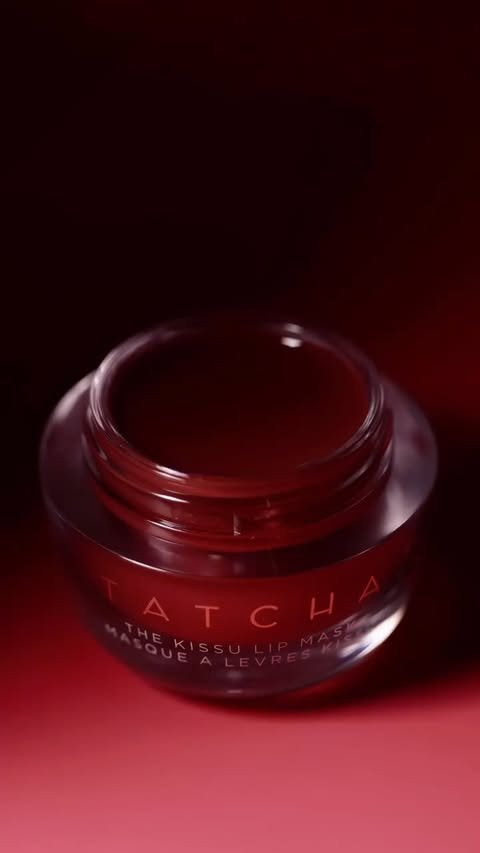
The shift: “fall routine” is not one format. Mass and youth brands are using reset language; color-led brands are shifting palettes and finishes; luxury brands are building seasonal mythology.
6. TikTok and Instagram are receiving genuinely different edits
CeraVe used the same creator-led “no makeup makeup” routine on both platforms, but TikTok added an immediate text bubble—“‘no makeup’ makeup using only CeraVe”—while Instagram let the spoken introduction and clean visual composition carry the opening.


The Ordinary made the contrast even clearer. Its TikTok niacinamide post used slang, a reaction sound, handheld creator footage, and the joke that customers had been “BEGGING” for a lower percentage. Instagram used floating product imagery, macro drops, diverse skin close-ups, and explicit pore-and-congestion claims.


Topicals followed the same logic: TikTok preserved participant dialogue and the messiness of a live game; Instagram used music, film grain, graphic overlays, and a curated event montage.
The shift: simple cross-posting is giving way to platform-specific framing. TikTok establishes relevance through a person, tension, slang, or participation. Instagram establishes desirability through art direction, texture, campaign coherence, and richer captions.
Brand-by-brand strategy breakdown
CeraVe: mass accessibility plus borrowed recognition
CeraVe’s week centered on the Super Boost Serum and skincare as preparation for a “no makeup makeup” finish. The creative system combined a recognizable celebrity recommendation, creator swatches, multitasking benefit language, drugstore accessibility, peptides, ceramides, and the recurring “Developed With Derms” brand position.
The smartest move was separating attention from explanation: Bethenny Frankel supplied the stop, while a relatable creator supplied texture and benefit translation. The softer routine execution then showed the serum alongside tinted mineral SPF and lip balm.
Hook formats used: celebrity green-screen reaction; “POV” framing; trend-led routine; “one serum, five wins”; direct product trial.
Strategic read: CeraVe is stretching beyond purely clinical communication without abandoning accessible efficacy. Its Instagram presentation was cleaner; TikTok carried the explicit hook layer.
La Roche-Posay: authority embedded in real-world utility
La Roche-Posay’s official Instagram activity was anchored to the US Open, where sunscreen education became an experience: UV visualization, dermatologist access, samples, application, discounts, and tennis-themed participation.
Its creator ecosystem added two distinct persuasion routes. The paid travel testimonial made Cicaplast a recovery ritual, while the esthetician cleanser guide positioned the brand as a sensible selection inside an independently framed category comparison.
Hook formats used: event rule; giveaway; tough-love price challenge; night-versus-morning reveal; age and compliment testimony.
Strategic read: La Roche-Posay is strongest when professional authority is attached to a concrete decision or context—what to buy for a skin type, what to use after travel, or why sunscreen matters at an outdoor event.
The Ordinary: the week’s clearest integrated launch system
The Ordinary built one PDRN idea across creator education, meme language, custom animation, ingredient contrast, a London pop-up, and benefit pairings. It also kept niacinamide active with a TikTok joke about concentration and a polished Instagram benefits execution.

Hook formats used: controversy correction; blunt all-caps claim; “pair it with” education; casual question; location-specific pop-up tease; animated metaphor.
Creator partnerships: custom artist collaboration with @andrewknives and brand-hosted creator/spokesperson formats.
Strategic read: The Ordinary did not dilute its science positioning. It made the science socially flexible—funny on TikTok, artistic on Instagram, and experiential offline.
Bubble: urgency, participation, and simple routines
Bubble alternated among a wellness giveaway, a full hydration routine, a final-chance e.l.f. collaboration post, and a sitewide promotional push. Its giveaway connected hypochlorous acid spray and lip balm to Pilates socks, making skincare part of a fitness-lifestyle bundle.

The e.l.f. collaboration used a five-second forced-perspective gag outside Target, set to playful audio. The urgency lived mainly in the caption, while the video itself delivered recognition and visual novelty.

Hook formats used: giveaway announcement; simplification claim; final-chance language; sale urgency; visual trick.
Strategic read: Bubble’s feed was the most conversion-oriented of the group, but it balanced promotions with unusually strong TikTok-native participation and creator-led education.
Drunk Elephant: mechanisms and ingredients over trend chasing
Drunk Elephant’s TikTok showed creator Marta Kul mixing C-Firma Fresh from its separate components, shaking it, loading the package, and applying it. Packaging supplied the claims around L-ascorbic acid, ferulic acid, firming, and brightening.

Instagram went deeper into the Kamo triple-peptide complex, while another creator-led TikTok framed a bronzy wash as supporting skin health. The brand’s strongest recurring device is product behavior: mixing, dispensing, blending, and revealing finish.
Hook formats used: visual unboxing; “please brighten responsibly”; “why triple peptide?”; beauty-result question.
Strategic read: Drunk Elephant is using formulation mechanics as content. That preserves its premium efficacy position while still giving creators satisfying actions to film.
Glow Recipe: launch saturation plus community seeding
Glow Recipe devoted the week to Vegan PDRN Lip Blur Balm, using teaser, launch, shade, texture, and trend-origin content across both platforms. It simultaneously seeded Dew Drops through sorority recruitment communities and previewed limited-edition kits.
Hook formats used: anthropomorphic product desire; “the wait is almost over”; texture-first macro; seasonal color cue; celebratory community montage.
Strategic read: Glow Recipe is extending “skincare-powered” beyond facial treatment into hybrid color. The campaign sells finish first and ingredient relevance second, a reversal of the more clinical PDRN approach used by The Ordinary.
Tatcha: ritual, heritage, and sensory luxury
Tatcha’s TikTok opened a calming ritual through shoji doors, mindful movement, essence pouring, and cream application. The relatable overlay—“Me before anything that feels overwhelming”—connected the brand’s skin-and-mind philosophy to an everyday emotional state.

Instagram carried longer heritage storytelling and a polished Japanese Maple Red launch. Its strongest cues were tactile rather than testimonial: liquid pressed into skin, cream scooped with a gold spatula, glossy lip-mask texture, leaves, shadows, and saturated autumn color.
Hook formats used: relatable emotional overlay; ritual transformation; seasonal reveal; founder and heritage narrative.
Strategic read: Tatcha resists the loudest SkinTok conventions. It borrows relatability for TikTok while protecting a slow, culturally specific luxury world.
Sunday Riley: creator visibility without a fresh official campaign burst
No recent official Sunday Riley post was confirmed inside the seven-day window reviewed. The brand remained visible through routine inclusion, including a creator’s pregnancy skincare-and-makeup montage featuring C.E.O. Glow Vitamin C + Turmeric Face Oil.

The creator showed and applied the oil but made no product-specific claim or visible paid disclosure. Other recent search visibility clustered around Good Genes, retinol, vitamin C, retail discovery, and general routine mentions rather than one coordinated brand message.
Strategic read: compared with The Ordinary’s PDRN launch or Youth To The People’s retinol sequence, Sunday Riley had less message ownership this week. Presence came from product familiarity inside multi-brand routines, not a clearly observable seven-day campaign narrative.
Topicals: culture before conventional product education
Topicals made its festival activation the content engine. Products appeared as prizes, samples, eye patches, merchandise, and social objects inside a branded world rather than as the subject of an ingredient lesson.
Hook formats used: participant prediction; game outcome; “everyone’s a winner”; high-energy recap; event invitation.
Creator partnerships: event attendees as micro-participants, an interviewer-led format, and credited filmmaking from @menelik.world.
Strategic read: Topicals is behaving like a cultural brand that sells skincare, not a skincare account borrowing culture. That distinction makes its community content feel less transactional.
Youth To The People: one launch, multiple levels of proof
Youth To The People concentrated on Superfood Protein Balm with expert education, myth debunking, application instructions, back-to-school routines, a disclosed eight-week partner story, and simple two-step content.
Hook formats used: ingredient question; myth debunk; visible-results promise; back-to-school essentials; simple routine.
Creator partnerships: esthetician Nayamka Roberts-Smith for mechanism and consistency education; @alexajay for lived, time-bound results; @Yomatisse for routine integration.
Strategic read: the campaign has an excellent evidence ladder—expert mechanism, user outcome, routine fit—but its observed TikTok reach was modest. The content is strategically coherent even if distribution had not yet caught up during the window.
The hook formats defining SkinTok now
Conflict and correction
The Ordinary’s “NO SALMON” message and niacinamide-percentage joke turn audience confusion into the opening. These hooks work because the viewer immediately understands what is being disputed.
Tough-love expert advice
“If you are paying $50 for a basic gentle cleanser, you are getting played” is sharper than “best affordable cleansers.” It combines professional authority, financial stakes, and a promised correction.
Outcome first, method second
“For my skin to look like this every day, I use this every night” and “This is how I go to bed and this is how I wake up” lead with the result, then earn the product explanation.
Simplification
“Having good skin really doesn’t have to be that complicated” responds to routine fatigue. This week, however, generic step-by-step routines were a cooler wider TikTok lane than visible results or specific conflict-driven education. Simplicity needs a defined audience or problem to stay distinctive.
Product-as-character
“your lips called. they want this” is not an efficacy claim. It gives a texture-led launch personality and hands the rest of the persuasion to product footage.
Recognition transfer
CeraVe’s Bethenny Frankel green-screen post begins with someone the audience may already recognize, then transfers attention to the serum and creator demonstration.
Participation and prediction
Topicals’ ring-toss format creates a miniature story—prediction, attempt, outcome, reward—without needing a conventional skincare hook.
What brands are not doing as much
Generic “here is my routine” content still appears, but it is less differentiated than problem-specific testimonials, expert corrections, and ingredient conflicts. The broader recent TikTok picture showed sequential routines and general product showcases trailing visible transformation and outcome-led formats on breakout tendency.
Pure clinical authority is also being softened. Even science-first brands are pairing explanations with humor, creators, art, application, or live experiences. Meanwhile, luxury brands are not racing to imitate slang-heavy TikTok; they are translating platform conventions into their existing worlds.
What this means for skincare marketers
Build campaigns as proof ladders
One product should generate several connected assets: a short tension hook, an expert mechanism explanation, a creator application, a time-bound result, a texture edit, and a community or retail context. Youth To The People and The Ordinary supplied the clearest models this week.
Give each ingredient one memorable distinction
“Vegan, not salmon,” “freshly mixed vitamin C,” and “consistency over concentration” are easier to retain than a long ingredient glossary. Pick the distinction that changes how someone understands or uses the product.
Match creators to jobs, not reach alone
Use credentialed creators for selection and mechanism, lived-experience creators for outcomes, recognizable personalities for attention, and community groups for cultural distribution. Asking one influencer to perform all four roles usually weakens credibility.
Treat events as content formats
The best activation content was not a generic booth recap. La Roche-Posay gave attendees UV visualization and skin checks; Topicals built games and prizes; The Ordinary connected a product distinction to a themed pop-up. The physical activity supplied the video narrative.
Separate TikTok and Instagram openings
TikTok needs context almost immediately: a contradiction, recognizable person, outcome, prediction, or blunt text overlay. Instagram can support slower visual storytelling, but it still benefits from a strong first composition—such as Glow Recipe’s grid or Tatcha’s red maple leaf.
Make seasonal relevance product-specific
Avoid a generic “fall skincare” label. Bubble connected September to routine simplification and barrier hydration; Glow Recipe connected fall to warm color; Tatcha connected autumn to Japanese maple heritage. The season should change the use case, aesthetic, or story.
Final takeaway
The defining skincare strategy this week was not simply “more science” or “more creators.” It was better division of labor. Ingredients supplied the narrative tension, experts supplied comprehension, creators supplied believable use, texture supplied sensory proof, and communities supplied cultural meaning. Brands that combined those elements looked current without surrendering their individual positioning.


